An equity curve simulator runs your strategy’s stats through thousands of randomized trade sequences — so you see possible account paths, drawdowns, and losing streaks before live capital is at risk. It is preparation, not prediction.
How this guide differs: This focuses on Monte Carlo equity curves from your performance metrics (psychology and risk planning). For replaying price history on charts, see how to backtest trading strategies and what is backtesting. For defining drawdown math, see what is maximum drawdown. Feed simulators from a trading journal with honest win rate and R:R.
What is a trading equity curve simulator?
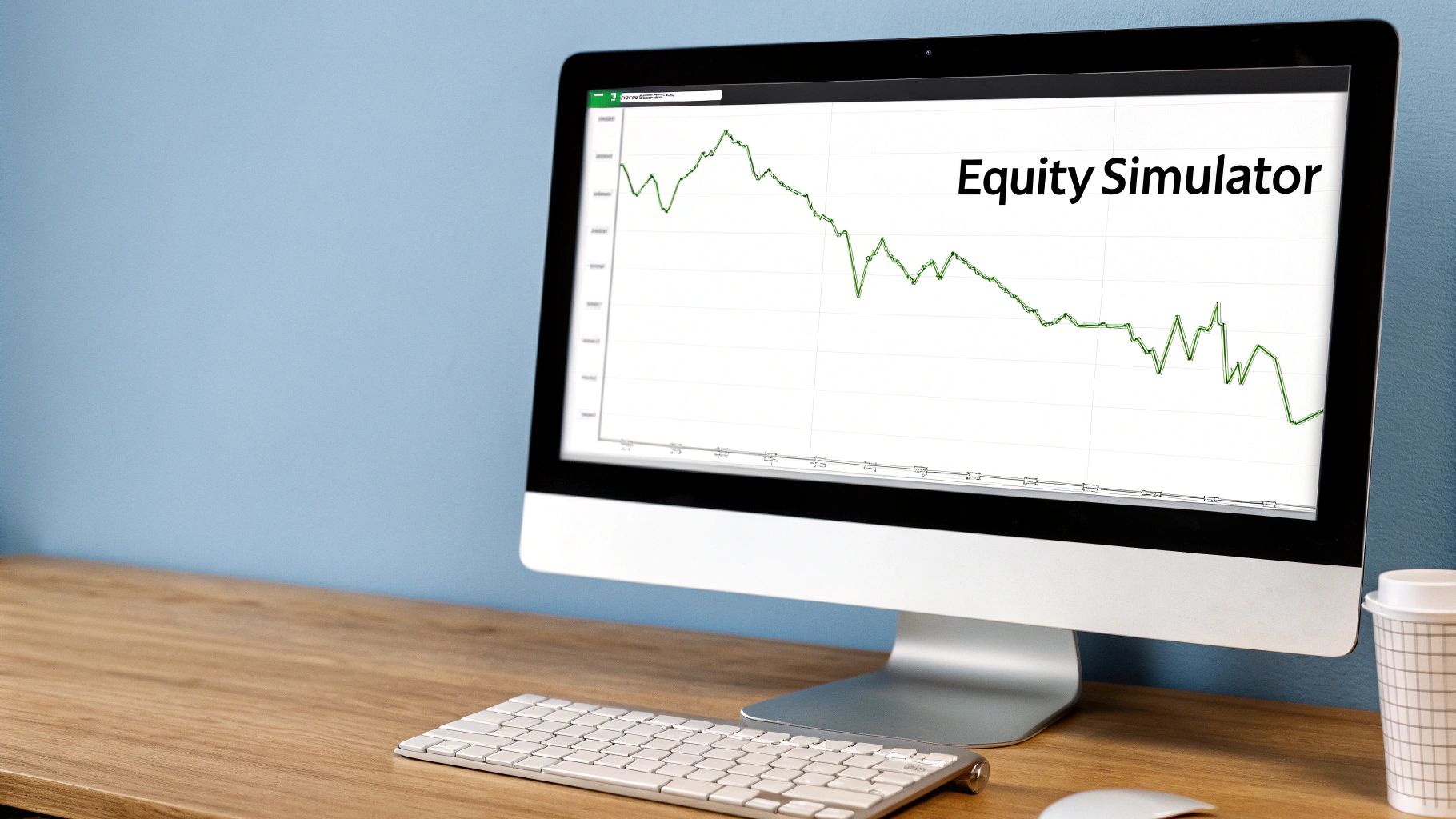
Winning streaks feel invincible; losing streaks make you doubt the plan. An equity curve simulator replaces guesswork with a range of outcomes based on inputs like:
- Win rate
- Average risk-reward (R:R)
- Risk per trade (e.g. 1% of account)
- Number of trades to simulate
Example: 55% win rate, 2:1 R:R, 1% risk per trade — run 1,000 sequences of 100 trades each. You will not get one “guaranteed” line; you get a distribution of curves, worst-case drawdowns, and how often a 10-trade losing streak appears.
Benefits:
- Manage expectations — profitable systems still have deep drawdowns
- Build mental toughness — seeing a 10-loss streak survive in simulation reduces panic live
- Trade with discipline — stick to the plan when you know the statistical envelope
Simulation is not fortune-telling. It turns emotional reactions into probability-aware decisions.
Core inputs (garbage in, garbage out)
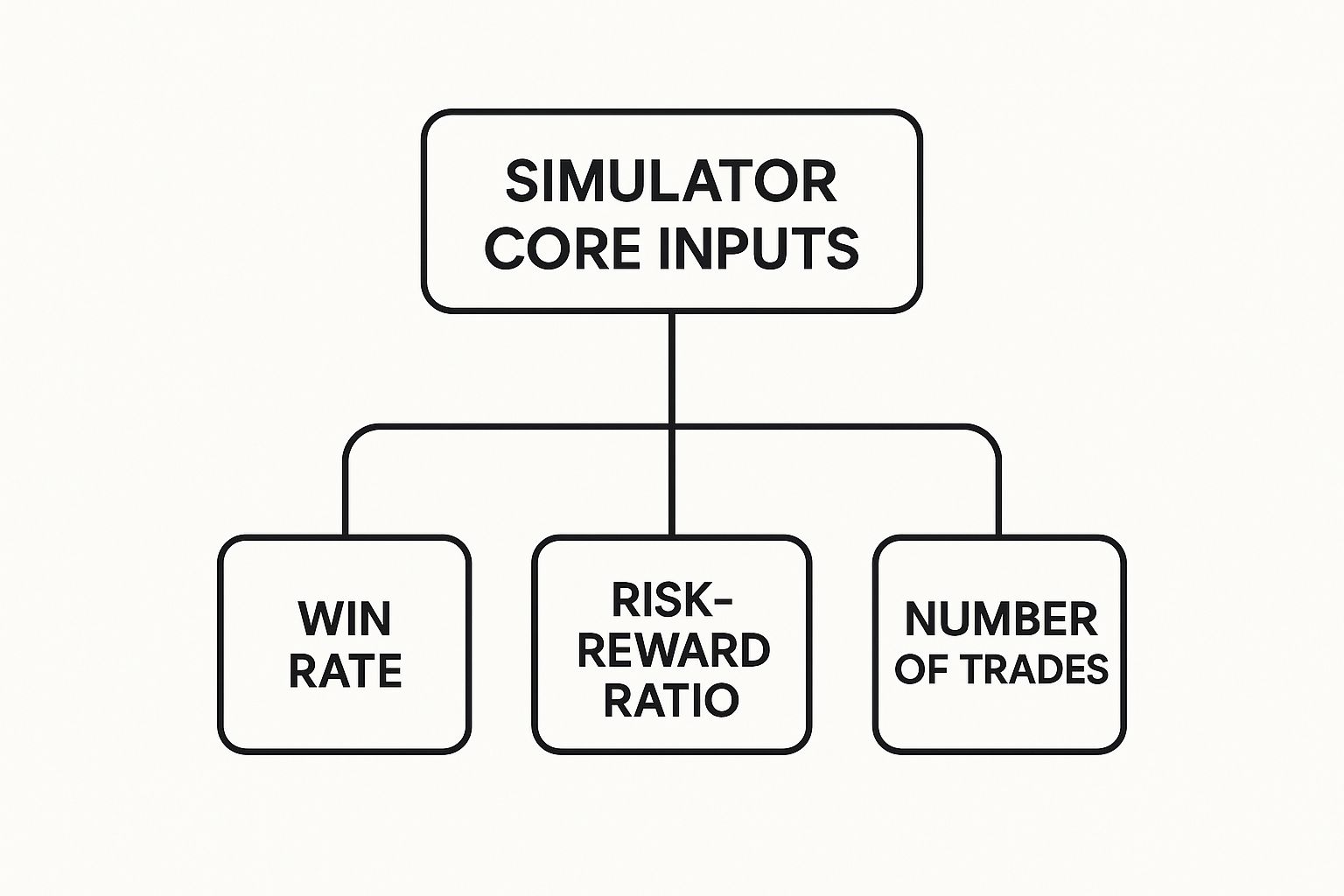
The engine runs on metrics from your journal — not hopes.
| Parameter | What it means | Why it matters |
|---|---|---|
| Win rate | % of winning trades | Drives frequency of streaks and recovery |
| Risk-reward ratio | Avg win size vs avg loss | Defines whether winners cover losers over time |
| Number of trades | Simulation length | Larger samples (500–1,000) smooth random noise |
Rules for honest inputs:
- Win rate — 60 wins in 100 trades = 60%; include every trade, including scratches
- R:R — 2:1 means average winner is 2× average loser (use journal averages, not best trade)
- Sample size — prefer 100+ real trades before trusting outputs; simulate 500–1,000 trade paths for stability
Collect metrics via how to backtest trading strategies or export from TraderSetup/your journal.
How to read simulation results
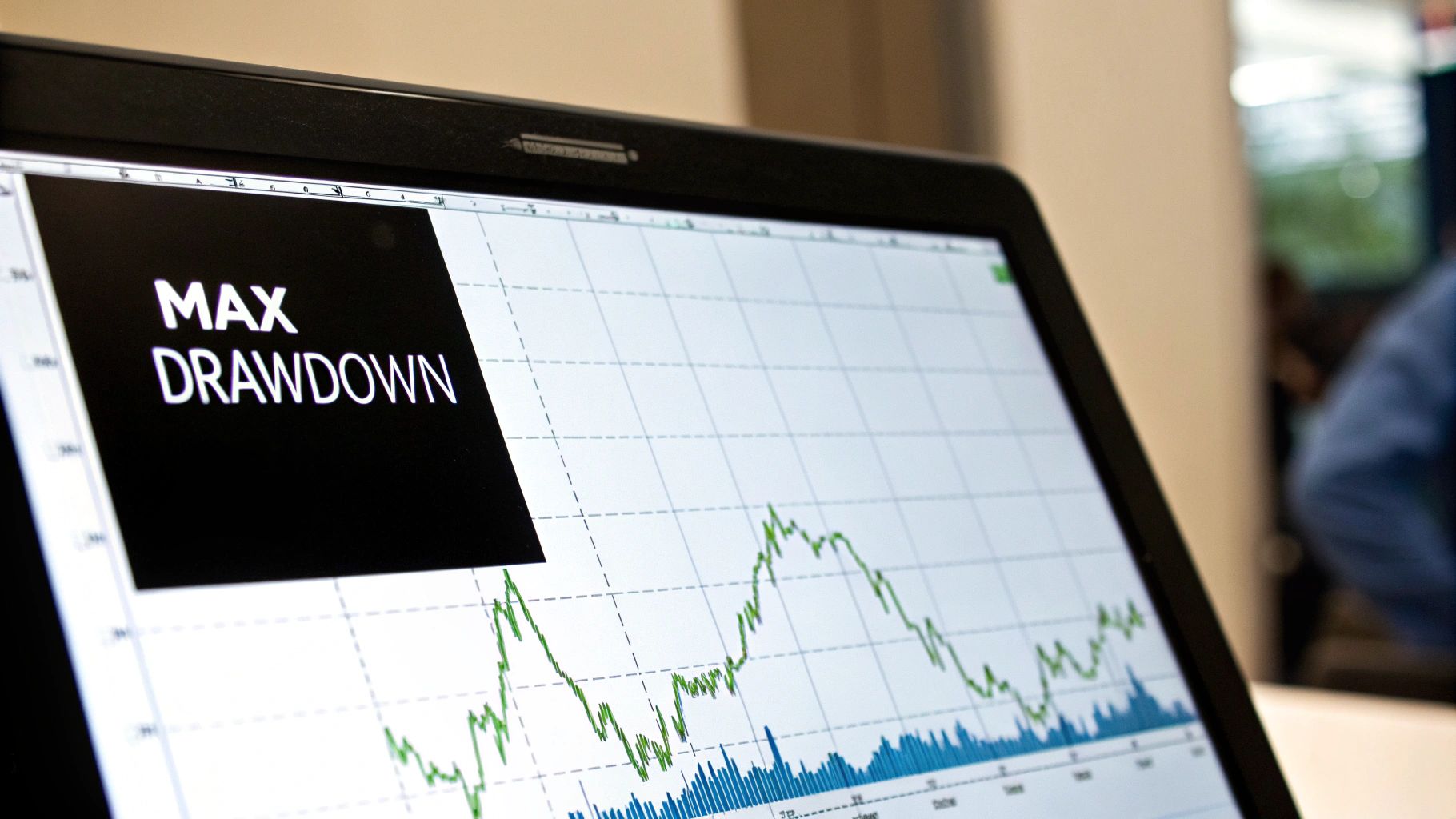
Do not fixate on the highest ending balance. Study patterns that repeat across runs.
Metrics that matter
- Maximum drawdown — largest peak-to-trough drop; if simulations show 25% DD, plan capital and psychology for it (what is maximum drawdown)
- Consecutive losses — how many losses in a row are likely before you abandon a valid edge
Monte Carlo in plain terms
Each run shuffles trade order while keeping the same win rate and R:R. Run again — curves differ. That is the point.
You might see average max drawdown 15% with a 10% chance of 30% — plan for tails, not averages only.
Goal: stop chasing certainty; manage probabilities.
Putting the simulator to work
Test risk per trade
Many traders start at 2% risk per trade. Simulate 1% — curves often smooth with shallower drawdowns and similar long-term upside. One variable change, no months of live experimentation.
Stress-test edge improvements
Journal shows 55% win rate — simulate 60% with the same R:R. See impact on growth, drawdown, and streak length before changing live rules.
Questions to answer in simulation:
- Does the edge hold over 1,000 trades?
- What happens if R:R improves from 1.5:1 to 2:1?
- Can the system survive 10 consecutive losses at your chosen risk %?
Build discipline through simulation

The hardest opponent is usually you — not the market. Simulation is a mental gym: rehearse a five-trade live slump after seeing a 15-trade drawdown recover in Monte Carlo.
That exposure builds trust in positive expectancy — you think like a casino owner: short-term losses, long-term edge.
Pair simulation with consistent journaling (TraderSetup, spreadsheet, or trading journal Excel template if you prefer sheets).
FAQ
How accurate is an equity curve simulator?
Only as good as your inputs. It mirrors historical performance statistics — not black swans or future discipline slips. Use 100+ real trades minimum for inputs.
How many trades should I simulate?
For the simulation run, use 500–1,000 trades. For the inputs, derive win rate and R:R from as much real data as you have.
Can it prove my strategy is profitable?
No proof — strong validation. If most paths rise with tolerable drawdowns, confidence goes up. If most paths blow up, refine before live size.
Equity curve simulator vs backtesting?
| Equity curve / Monte Carlo | Chart backtesting | |
|---|---|---|
| Input | Win rate, R:R, risk % | Historical prices, rules |
| Output | Distribution of account curves | Trade list on past data |
| Best for | Risk psychology, position sizing | Rule validation on history |
Related reading
- Why every trader needs a trading journal — source data for simulations
- What is maximum drawdown — interpret simulator valleys
- How to backtest trading strategies — collect win rate and R:R
- Books about trading psychology — mindset during drawdowns
- Risk management for traders — size positions to simulated tails