A trading journal is a structured record of every trade you take — entry, exit, size, setup, outcome, and the reasons behind your decisions. It is not a generic diary; it is a feedback system that turns individual trades into patterns you can measure and improve.
How this guide differs: This article defines what a trading journal is and what to include. For why journaling matters for performance and discipline, see why every trader needs a trading journal. For how to build the daily habit, see journaling for beginners.
What is a trading journal?
Think of it as a coach that never forgets a session. You log each trade with enough detail that you can review wins and losses objectively later — without relying on memory, which almost always favors your best trades and hides your mistakes.
A journal works for stocks, options, futures, forex, and crypto. The asset changes; the process does not: record, review, adjust.
Why traders keep a journal
If you want to improve beyond trial and error, a journal is how you spot what actually drives your results:
- Patterns — which setups, times of day, or market conditions help or hurt
- Progress — win rate, average win/loss, drawdown over weeks and months
- Discipline — whether you followed your plan or traded on emotion
You are not just collecting numbers. You are building a reflective practice that makes both wins and losses useful. For the full case on benefits and mindset, read why every trader needs a trading journal.
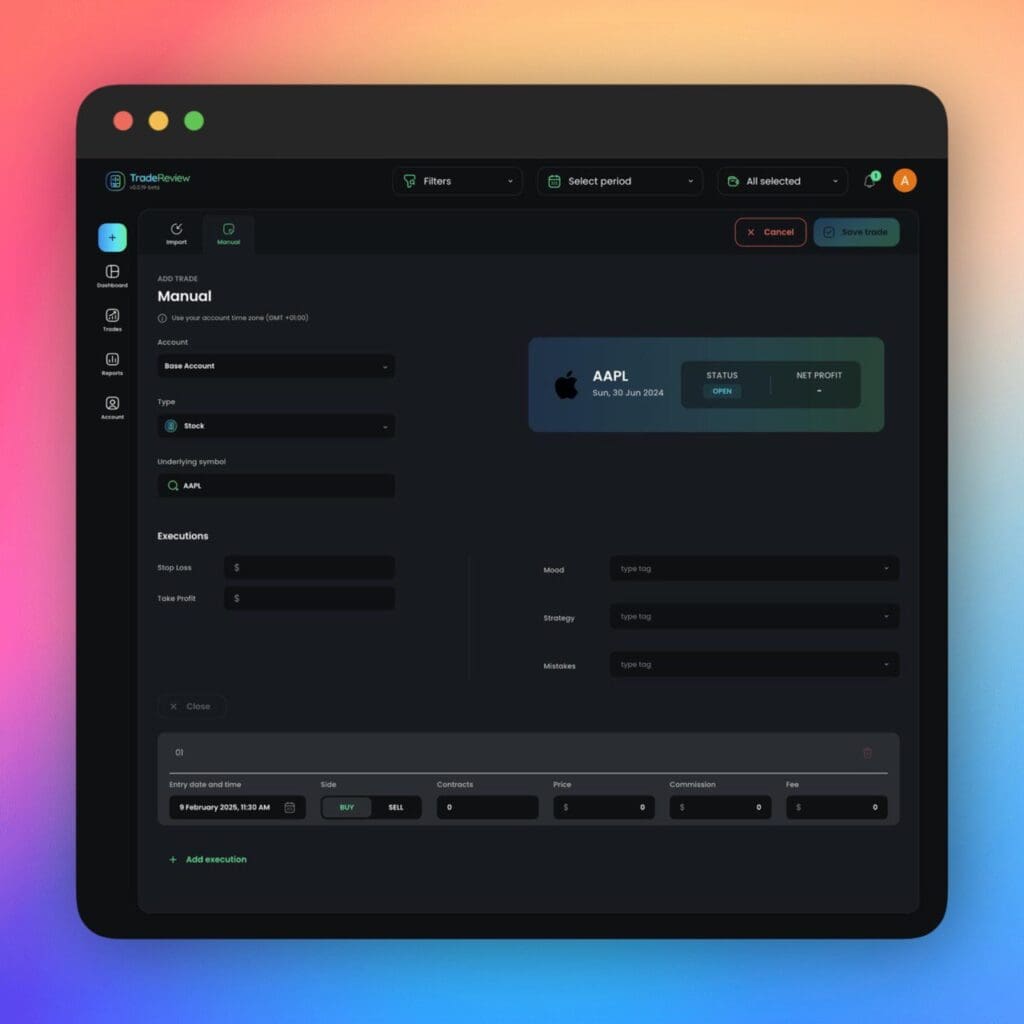
Key components of a trading journal
Trade details
Every entry should capture the facts of the trade:
- Symbol, direction, and position size
- Entry and exit prices and times
- Net profit or loss
- Setup or strategy name (same labels every time)
- Market context you care about (trend, volatility, news, session)
That data is the base layer for every review. Without it, metrics like win rate or profit and loss are guesswork.
Performance evaluation
Step back regularly and treat the journal as a mirror. Compare winning and losing trades: same setup, different outcome? Same mistake repeating?
Useful metrics to track:
- Win rate and profit factor
- Average win vs average loss
- Results by tag (setup, timeframe, asset class)
- Rule breaks — trades where you did not follow the plan
Market analysis
Do not only log prices. Note why the market context mattered: trend direction, key levels, catalysts, or correlation with indices. Connecting trades to context helps you see when a strategy fits the environment — and when it does not.
Risk management
Document how you sized the trade and where you placed stops or targets. Over time you can see whether risk per trade stayed consistent or drifted after wins and losses. Tie this to broader habits in risk management for traders.

What to record on each trade (minimum checklist)
Use the same fields every time so reviews stay comparable:
| Field | Example |
|---|---|
| Date / session | 2026-05-20, US morning |
| Symbol & direction | AAPL, long |
| Entry / exit | $190.50 → $192.10 |
| Size & P&L | 100 shares, +$160 |
| Setup tag | Pullback to 20-day MA |
| Plan followed? | Yes / No |
| Emotion note | Calm entry; exited early from fear |
| Lesson | Wait for full target when trend intact |
Apps like TraderSetup automate imports and tags; spreadsheets work too if you stay consistent — see Excel trading journal or best trading journal comparisons.
The role of trading psychology
Recognizing emotional triggers
Fear and greed show up in the journal as rushed entries, oversized positions, or exits that ignore your rules. When you tag emotions next to trades, patterns become obvious — for example, losses clustered after a big win (overconfidence) or after a streak of red days (revenge trading).
Managing stress and discipline
Logging how you felt during a trade does not fix psychology overnight, but it creates accountability. Review sessions are where you decide one concrete rule for next week: max trades per day, mandatory stop placement, or no trading the first 15 minutes after open.
Turn journal data into better strategies
Learn from historical data
Filter past trades by setup, market condition, or time of day. Which buckets have the best expectancy? Which should you stop trading? That is how journal data replaces gut feel with evidence.
Set clear goals
Your journal can track goals that are specific and measurable — for example, max daily loss, target win rate on one setup, or number of rule-compliant trades per week. Revisit goals in a monthly review, not only when P&L swings.
Adapt as the market changes
Markets shift; your journal shows when an edge is fading before your account tells you harshly. Retire setups that no longer work, refine those that still do, and document the change so future you understands the decision.
Related reading
- Why every trader needs a trading journal — benefits and review habits
- Journaling for beginners — start and stick with the routine
- Best trading journal — app and tool options
- Free trading journal app — get started without cost
- How to calculate win rate — core performance metrics
Start your journey to smarter trading today with TraderSetup — free.